How to Winterize Your Pizza Oven: Essential Cold-Weather Care & Maintenance Tips for Outdoor and Wood-Fired Ovens
Introduction
One will find that the transition from autumn to winter presents a unique set of challenges for pizza‑oven owners. This guide explains how to protect both outdoor and wood‑fired ovens from moisture, temperature extremes, and corrosion. Readers will learn a systematic approach that combines thorough cleaning, proper storage, and the strategic use of accessories. By following these steps, one can extend the life of an investment and ensure that the oven is ready for spring without performance loss.
What You’ll Need
- Soft‑bristle cleaning brush
- Heat‑resistant gloves
- Weather‑proof oven cover or tarp
- Airtight containers for wood pellets or charcoal
- Thermometer for checking residual heat
- Optional: portable indoor oven for winter cooking (Big Horn 14" Indoor Pizza Oven)
Step‑by‑Step Instructions
1. Clean the Cooking Surface and Interior
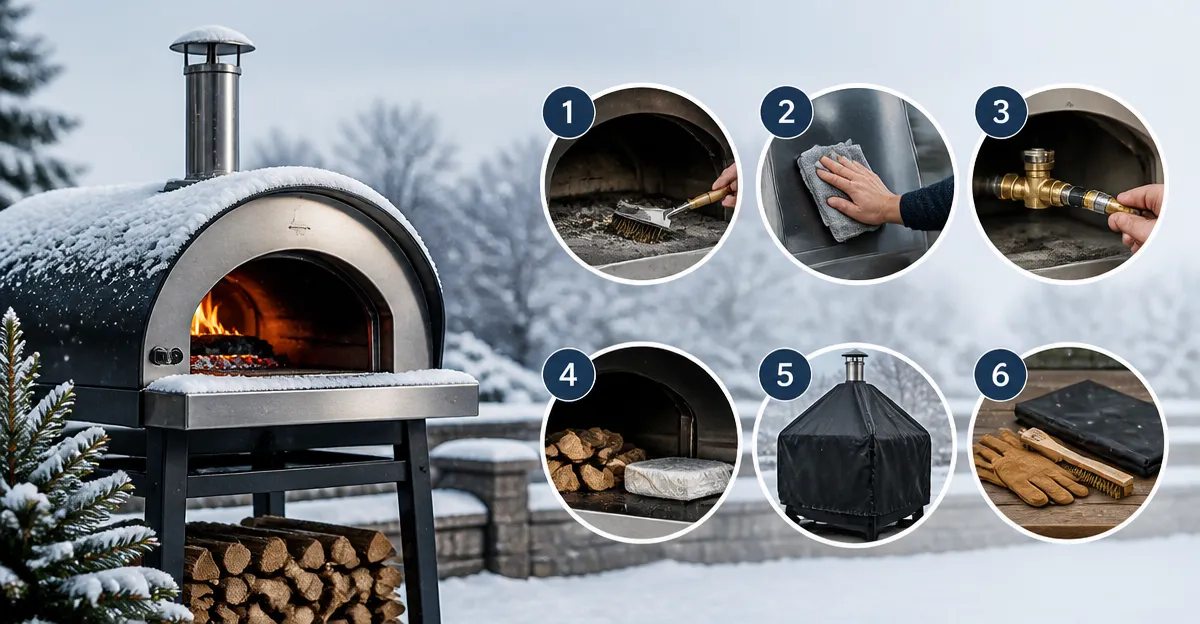
The first step in winterizing any pizza oven is to remove food residues, ash, and grease that could retain moisture. One should allow the oven to cool completely, then use a soft‑bristle brush to sweep away loose debris from the stone and firebox. For stubborn carbon build‑up, a damp cloth followed by a dry rag will prevent rust formation. If the oven is a multi‑fuel model such as the Big Horn 12" Multi‑Fuel Pizza Oven, the stainless‑steel exterior can be wiped with a mild detergent; the stainless construction resists corrosion and simplifies cleaning.
Why this matters: Residual food particles attract moisture, which accelerates metal oxidation during freeze‑thaw cycles. A clean surface also ensures that the next heating cycle will be efficient, saving fuel and reducing wear.
2. Inspect Seals, Gaskets, and Moving Parts
After cleaning, one should examine any door seals, gasket material, and hinges for cracks or wear. The Big Horn 12" model features folding legs that lock into place; ensure the locking pins are not bent and that the legs fold smoothly. For the Ooni Karu 12 (Ooni Karu 12 Multi‑Fuel Pizza Oven), the removable chimney should be checked for blockage and rust, as the high‑temperature steel can develop surface oxidation if left damp.
Why this matters: Compromised seals allow cold air and moisture to infiltrate the firebox, leading to uneven heating and potential damage to internal components.
3. Store or Cover the Oven Properly
Outdoor ovens require a weather‑proof cover that can withstand snow, rain, and wind. One may use a heavy‑duty tarp with grommets, securing it with rope or bungee cords to prevent it from blowing away. If the oven includes a built‑in cover, such as the portable design of the Big Horn 12" model, ensure the cover is fully closed and fastened before the first snowfall.
Why this matters: A breathable yet waterproof barrier prevents moisture from seeping into the stone while allowing any residual heat to escape, reducing the risk of thermal shock.
4. Manage Fuel Storage for Wood‑Fired and Pellet Ovens
For ovens that rely on wood, charcoal, or hardwood pellets, it is essential to store fuel in airtight containers. The Big Horn 12" oven recommends using natural hardwood pellets and keeping them in a sealed bin to avoid moisture absorption. Moist pellets produce excessive smoke and can cause uneven combustion when spring arrives.
Why this matters: Dry fuel ignites more reliably, reduces the amount of ash produced, and protects the firebox from corrosive by‑products that form when wet fuel burns.
5. Protect Electrical Components (Electric Models)
Indoor electric ovens such as the Ninja Artisan Electric Pizza Oven and the Big Horn 14" Indoor Pizza Oven contain heating elements and control boards that are sensitive to condensation. One should unplug the unit, wipe down the exterior with a dry cloth, and store it in a dry garage or pantry. If the oven will remain in the kitchen, keep the surrounding area well‑ventilated and consider placing a dehumidifier nearby.
Why this matters: Electrical components exposed to moisture can short‑circuit, leading to costly repairs or safety hazards.
6. Perform a Final Heat‑Cycle Test
Before sealing the oven for the season, one may run a short heat‑cycle to drive out any remaining moisture. Set the temperature to a moderate level (around 350°F) and let the oven run for 30 minutes, then turn it off and allow it to cool naturally. This process, often called “seasoning,” helps the stone release trapped humidity and creates a protective layer of heat‑treated surface.
Why this matters: A dry stone is less likely to crack when temperatures drop below freezing, and the seasoning improves heat retention for the next cooking season.
7. Consider a Winter‑Ready Backup Oven
If outdoor cooking is essential during winter, one can supplement the primary oven with an indoor electric model. The Big Horn 14" Indoor Pizza Oven reaches 850°F in 15 minutes, offers PID temperature precision, and includes a removable stone for easy cleaning. Its compact flip‑up design saves counter space while delivering restaurant‑style results, making it an excellent winter backup.
Why this matters: Indoor ovens eliminate exposure to the elements, allowing continuous pizza making without the risk of outdoor damage.
Tips & Pro Tips
- Use heat‑resistant gloves when handling hot stones to prevent burns.
- Place a silica gel packet inside the cover pouch to absorb residual humidity.
- Label fuel containers with purchase dates to rotate stock and use the oldest pellets first.
- Check local building codes if the oven is installed near a structure; some municipalities require additional fire‑proof barriers for winter storage.
- For wood‑fired ovens, consider adding a small metal rain guard that slides over the opening while not in use.
Troubleshooting
Problem: Persistent rust on the exterior after a wet winter.
Solution: Lightly sand the affected area, apply a high‑temperature stainless‑steel primer, and repaint with heat‑resistant paint. Regularly inspect the oven after heavy snow to catch early signs of corrosion.
Problem: Oven does not reach advertised temperature after winter.
Solution: Verify that the fuel source is dry, the firebox is clear of ash, and the temperature sensor is not obstructed. For electric models, ensure the power outlet supplies the correct voltage (110‑120V) and that the heating elements are not degraded.
Conclusion
One now possesses a comprehensive checklist for winterizing pizza ovens, covering cleaning, inspection, protection, fuel management, and optional indoor backups. By investing a modest amount of time each autumn, an oven owner can avoid costly repairs, maintain optimal performance, and look forward to the first spring bake with confidence. The steps outlined in this guide are applicable to a wide range of models, from the portable Big Horn 12" Multi‑Fuel Pizza Oven to the high‑tech Ninja Artisan Electric Pizza Oven.
When the cold season arrives, remember that preparation is the key to longevity. Follow the recommended procedures, use the suggested accessories, and the pizza oven will continue to deliver restaurant‑quality results for many years to come.
Products Mentioned in This Guide
Frequently Asked Questions
How often should I clean my pizza oven before winter?
Clean the oven thoroughly after the last use in autumn, removing ash and food residue, then give it a final wipe‑down before covering it for storage.
What type of cover is best for protecting an outdoor pizza oven in cold weather?
Use a weather‑proof, insulated cover or tarp that fits snugly and repels moisture, snow, and wind.
How can I prevent moisture damage inside a wood‑fired oven during winter?
Allow the oven to cool completely, then dry the interior with a brush and store it under a dry cover; consider using a dehumidifier in the enclosure if possible.
Should I store wood pellets or charcoal in airtight containers, and why?
Yes, airtight containers keep moisture out, preserving fuel quality and preventing mold or clumping that can affect combustion.
Can I still bake pizza in winter using a portable indoor oven?
Absolutely; a compact indoor pizza oven lets you enjoy fresh pizza year‑round while your outdoor oven stays protected.