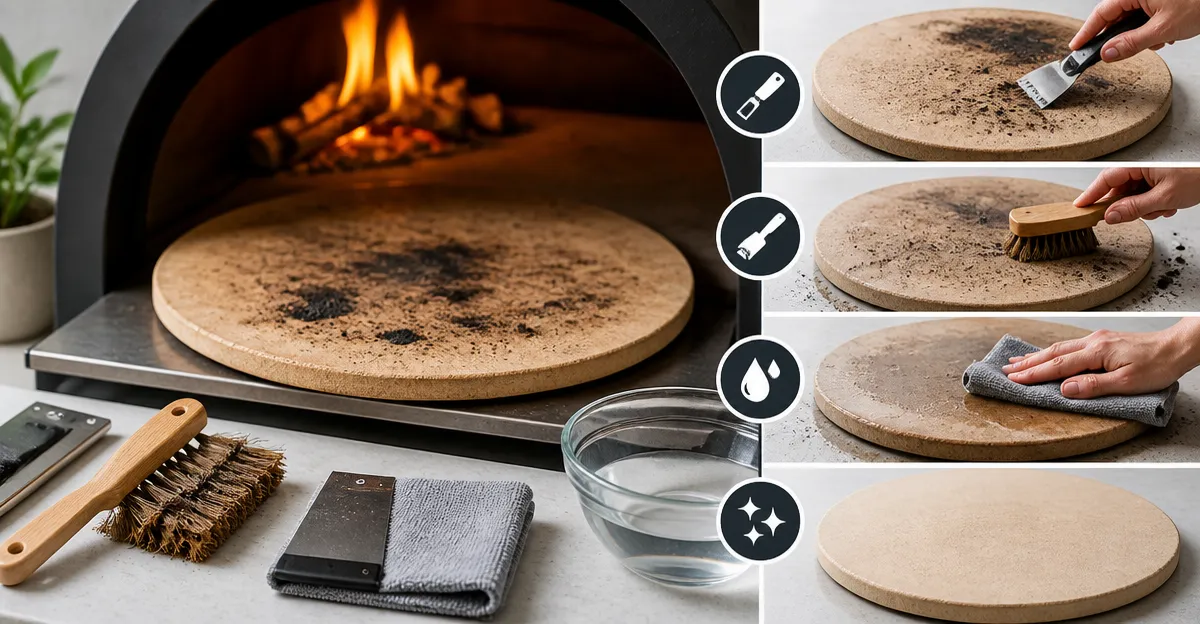
How to Clean a Pizza Oven Stone Safely: Step‑by‑Step Guide to Remove Burnt‑On Residue Without Damaging It
Introduction
Maintaining a pizza oven stone is essential for preserving the crispness of crusts and the longevity of the stone itself. This guide will teach the reader how to clean a pizza oven stone safely, how to remove stubborn burnt‑on residue, and why each step matters. By following these instructions, one can avoid common pitfalls such as cracking, warping, or reducing the stone’s heat‑distribution properties.
Cleanliness directly influences flavor; a stone that retains old oils will produce soggy or off‑tasting pizza. The techniques described here are suitable for both home ovens and outdoor grills, and they can be applied to any cordierite or ceramic stone.
What You’ll Need
- Warm water (no detergent)
- Soft‑bristle brush or non‑metal scraper
- Baking soda
- Plastic dough cutter or scraper (optional)
- Clean kitchen towel or paper towels
- Heat‑resistant gloves
For optimal results, consider the following tools that have proven useful for many home chefs:
- Old Stone Pizza Stone – a 16‑inch round stone that exemplifies the type of surface you will be cleaning. Price: $29.95, Rating: 4.4/5 (3,009 reviews).
- Unicook Pizza Stone – a 15×12 rectangular stone that is slightly thicker, making it more resistant to thermal shock. Price: $28.79, Rating: 4.5/5 (9,369 reviews).
- KitchenStar Pizza Stone Set – includes a plastic scraper, a sturdy acacia wood peel, and a stainless‑steel brush. Price: $69.97, Rating: 4.7/5 (21,476 reviews).
Step‑by‑Step Instructions
1. Allow the Stone to Cool Completely
Never attempt to clean a hot stone. Sudden temperature changes can cause micro‑cracks that later develop into fractures. After baking, turn off the oven or grill and let the stone sit until it reaches room temperature. This typically requires 30‑45 minutes for a standard 16‑inch stone.
Why it matters: A cooled stone is less likely to chip when you scrape off debris, and the porous surface will not absorb water too quickly, reducing the risk of moisture‑induced damage.
2. Remove Loose Food Particles
Using a soft‑bristle brush or a plastic scraper, gently brush away any loose crumbs, charred cheese, or vegetable bits. The KitchenStar Pizza Stone Set includes a stainless‑steel scraper with a comfortable beech wood handle that is ideal for this purpose.
Technique: Hold the scraper at a shallow angle and push away from you. Avoid applying excessive force that could gouge the stone’s surface.
3. Rinse with Warm Water Only
Fill a large basin or sink with warm water (approximately 40‑45 °C). Submerge the stone briefly and use the brush to loosen any remaining residue. Do not use soap, as the porous material will absorb detergents and impart unwanted flavors to future pizzas.
Why warm water: It softens baked‑on sugars without shocking the stone’s thermal structure. If the stone is too heavy to lift, you may rinse it in place using a spray bottle, but be sure to wipe away excess water with a towel.
4. Treat Stubborn Burnt‑On Residue with a Baking Soda Paste
For areas that remain dark or sticky, create a paste of baking soda and a small amount of water (approximately 3 parts baking soda to 1 part water). Apply the paste with a soft cloth, let it sit for 10‑15 minutes, and then gently scrub with the brush.
Product recommendation: The Unicook Pizza Stone is praised for its reversible smooth surface, which makes it easy to see where the paste has been applied. Its cordierite composition tolerates the mild abrasive action of baking soda without scratching.
Rinse thoroughly after scrubbing to ensure no residue remains. Residual baking soda can affect the taste of the next bake.
5. Dry the Stone Completely
After the final rinse, pat the stone dry with a clean kitchen towel and then place it in a well‑ventilated area for at least one hour. Some chefs recommend leaving the stone in a low‑heat oven (around 150 °F) for 30 minutes to evaporate hidden moisture.
Importance of drying: Moisture trapped within the stone can turn to steam during the next heating cycle, leading to uneven crusts and possible cracking.
6. Re‑Season (Optional but Recommended)
Although not required for all stones, a light coating of oil can help seal the surface and reduce future sticking. Use a high‑smoke‑point oil such as grapeseed or avocado oil. Apply a thin layer with a paper towel, then bake the stone at 400 °F for 30 minutes. Allow it to cool before storing.
This step is especially beneficial for stones that have been used extensively for bread or vegetables, as the additional seasoning creates a protective barrier.
Tips & Pro Tips
- Never use metal scouring pads. They can create permanent scratches that harbor food particles.
- Avoid dish soap. Even a small amount can be absorbed and later released during baking.
- Preheat the stone for at least 30 minutes. This ensures even heat distribution and reduces the likelihood of soggy bases.
- Store the stone on a wooden board. Direct contact with metal oven racks over long periods can cause minor warping.
- Use a pizza peel. The KitchenStar Pizza Stone Set includes an acacia wood peel that slides easily under the pizza and prevents the stone from being dragged across the oven floor.
Troubleshooting
| Problem | Possible Cause | Solution |
|---|---|---|
| Stone cracks after cleaning | Sudden temperature change or water absorbed into micro‑cracks | Allow stone to cool completely before any cleaning; never submerge a hot stone. |
| Persistent oily taste | Soap residue or insufficient rinsing | Rinse with warm water multiple times; avoid any detergent. |
| Uneven browning | Stone not preheated evenly | Preheat for at least 30‑45 minutes; consider rotating the stone halfway through baking. |
Conclusion
By following these six steps, one can clean a pizza oven stone safely, remove burnt‑on residue, and preserve the stone’s performance for years to come. Regular maintenance prevents flavor transfer, extends the stone’s lifespan, and ensures every pizza emerges with a professional‑grade crust. Remember to cool, scrape gently, use only warm water, treat stubborn spots with baking soda, dry thoroughly, and optionally re‑season. With the right tools and a disciplined routine, the stone will remain a reliable partner in every home‑cooked pizza night.
Products Mentioned in This Guide
Frequently Asked Questions
What is the safest way to clean a pizza oven stone?
Use warm water and a soft‑bristle brush or non‑metal scraper, avoiding any detergents that can soak into the stone.
How can I remove stubborn burnt‑on residue without damaging the stone?
Create a paste of baking soda and water, apply it to the residue, let it sit briefly, then gently scrub with a plastic scraper.
Can I use regular dish soap or harsh chemicals on a pizza stone?
No; harsh chemicals can be absorbed and affect flavor, so stick to plain water and mild baking soda.
How often should I clean my pizza oven stone?
Clean the stone after each use once it has cooled, and perform a deeper cleaning weekly if you bake frequently.
Do I need to pre‑heat the stone before cleaning it?
No; always let the stone cool completely before cleaning to prevent cracks from thermal shock.